
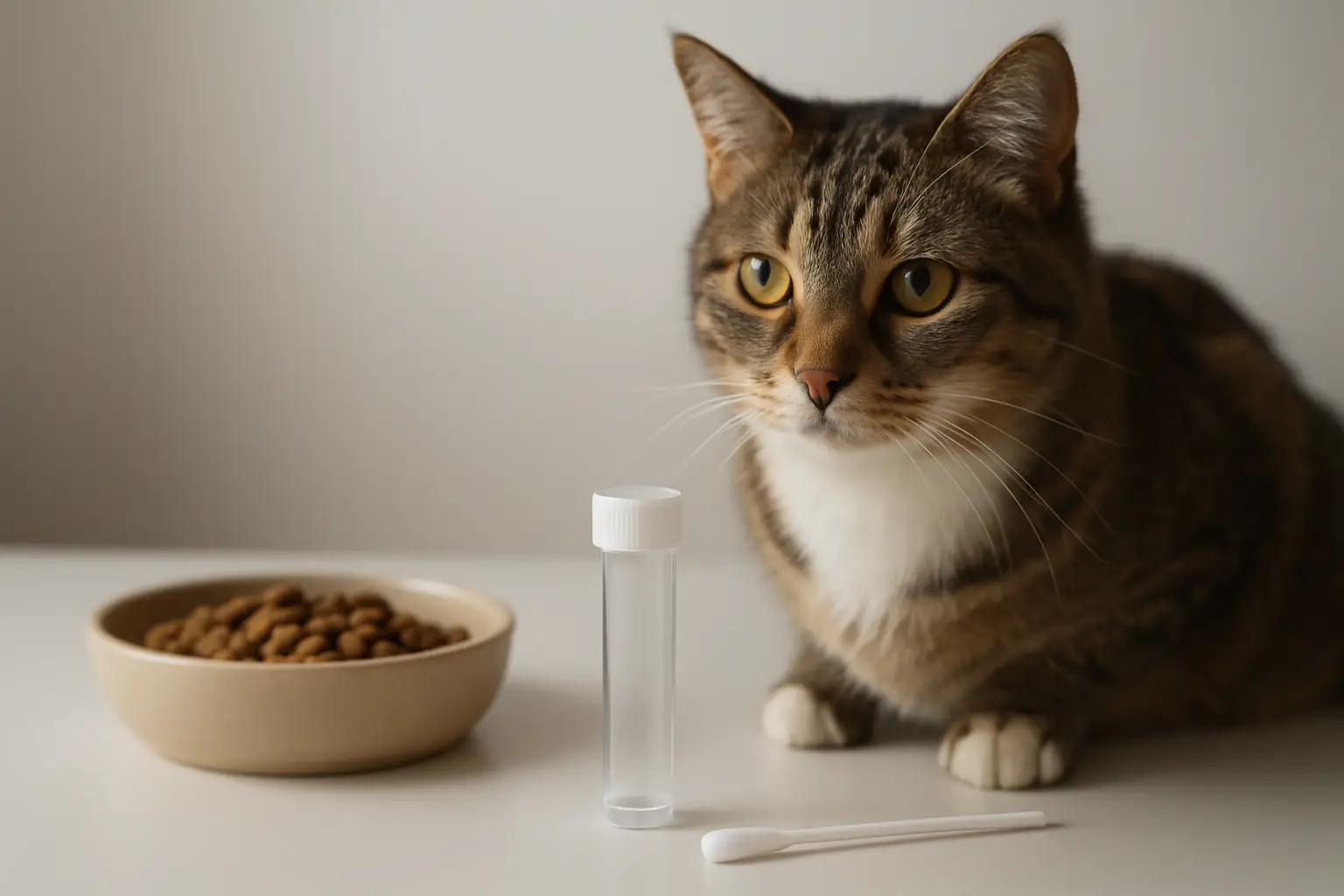
Description
The Cat Intolerance Test is an at-home screening option for owners who want more structure when exploring possible food or environmental sensitivity patterns.
The laboratory-based report can help organize information about potential intolerance triggers and support more informed discussions about your cat’s food, treats, personal-care products, household environment, and daily routine.
Rather than making several changes based only on observation or guesswork, owners can use the report as a wellness-planning reference. However, the test does not diagnose a food allergy, environmental allergy, intolerance, infection, or other veterinary condition.
Results should be considered alongside your cat’s symptoms, medical history, diet, lifestyle, environment, and veterinary assessment.
Why cat owners choose this test
This product may be suitable for owners who want:
- A cat intolerance screening report
- Food and environmental sensitivity insights
- A simple at-home collection process
- More structure before changing food or daily routines
- Information to support veterinary conversations
- A focused alternative to broader feline testing packages
- An estimated turnaround of 3–5 working days
What the test explores
The report provides screening information related to possible food and environmental intolerance patterns.
Depending on the laboratory methodology and included panel, the report may cover areas such as:
- Food ingredients
- Proteins and other dietary components
- Treats
- Environmental exposures
- Household products
- Grooming or personal-care products
- Other wellness-related sensitivity categories
Review the current panel details before ordering to confirm which items are included.
A reported response does not prove that a particular item is causing your cat’s symptoms.
When this test may help
This test may provide a useful starting point when:
- Recurring concerns are difficult to connect to one trigger
- You are reviewing your cat’s food or treats
- You are considering changes to household products
- You want organized information before veterinary follow-up
- You prefer a focused wellness screening product
- You understand that screening results are not a veterinary diagnosis
Cats with persistent, severe, or worsening symptoms should receive veterinary care rather than relying only on an at-home screening test.
How the test process works
- Order the Cat Intolerance Test kit online.
- Review the collection instructions included with the kit.
- Collect the required sample at home using the supplied materials.
- Package and return the sample according to the instructions.
- The laboratory processes the eligible sample.
- Review the completed screening report.
- Discuss ongoing concerns or planned changes with your veterinarian.
What you receive
- Cat intolerance screening for one cat
- Food and environmental sensitivity insights
- At-home sample collection materials
- Step-by-step collection instructions
- Sample packaging and return guidance
- Laboratory processing
- Cat intolerance screening report
Estimated turnaround time
The estimated laboratory turnaround is 3–5 working days after the laboratory receives an eligible sample.
Shipping time, weekends, holidays, laboratory volume, sample quality, and recollection requirements may affect the total completion time.
An incomplete, damaged, contaminated, or incorrectly collected sample may require recollection.
How to use the report
The report may help support more informed discussions about:
- Cat food ingredients
- Treats
- Environmental exposures
- Household cleaning products
- Grooming products
- Daily routines
- Questions about elimination diets
- Whether additional veterinary testing may be appropriate
Avoid making several changes at the same time, as this can make it harder to identify what may be affecting your cat.
Do not place your cat on a highly restrictive or unbalanced diet without veterinary guidance. Cats have specific nutritional requirements, and inappropriate dietary changes can cause serious health problems.
Important limitations
Recurring symptoms in cats may have many possible causes, including:
- Food allergies
- Environmental allergies
- Parasites
- Skin conditions
- Infections
- Digestive disorders
- Medication effects
- Stress
- Nutritional issues
- Other veterinary conditions
An intolerance screening report is not the same as a clinical allergy diagnosis, diagnostic laboratory testing, or a veterinarian-supervised elimination diet.
This test does not:
- Diagnose a food allergy or environmental allergy
- Confirm a clinical food intolerance
- Identify the medical cause of symptoms
- Replace a veterinary examination
- Replace veterinary allergy testing
- Replace a professionally supervised elimination diet
- Recommend medication or treatment
- Guarantee that removing a reported item will improve symptoms
Do not begin, stop, or change medication, supplements, veterinary treatment, or a prescribed diet based only on this report.
Important note
This product is intended for personal information gathering and feline wellness planning.
It is not a substitute for veterinary assessment, diagnosis, treatment, medical advice, or emergency care.
Contact a veterinarian if your cat has persistent itching, skin irritation, recurring ear concerns, vomiting, diarrhea, hair loss, appetite changes, weight changes, or ongoing discomfort.
Seek urgent veterinary care for breathing difficulty, facial swelling, collapse, repeated vomiting, severe diarrhea, extreme weakness, inability to urinate, or another sudden or serious symptom.
Reviews
There are no reviews yet.