Court or attorney-directed matters
Family law, identity, custody, support, inheritance, or other legal matters may require verified participants and documented sample handling.
A legal DNA test involves more than laboratory analysis. The people being tested may need to show identification, have their samples collected by an approved third party, and follow a documented transfer process from collection to the laboratory.

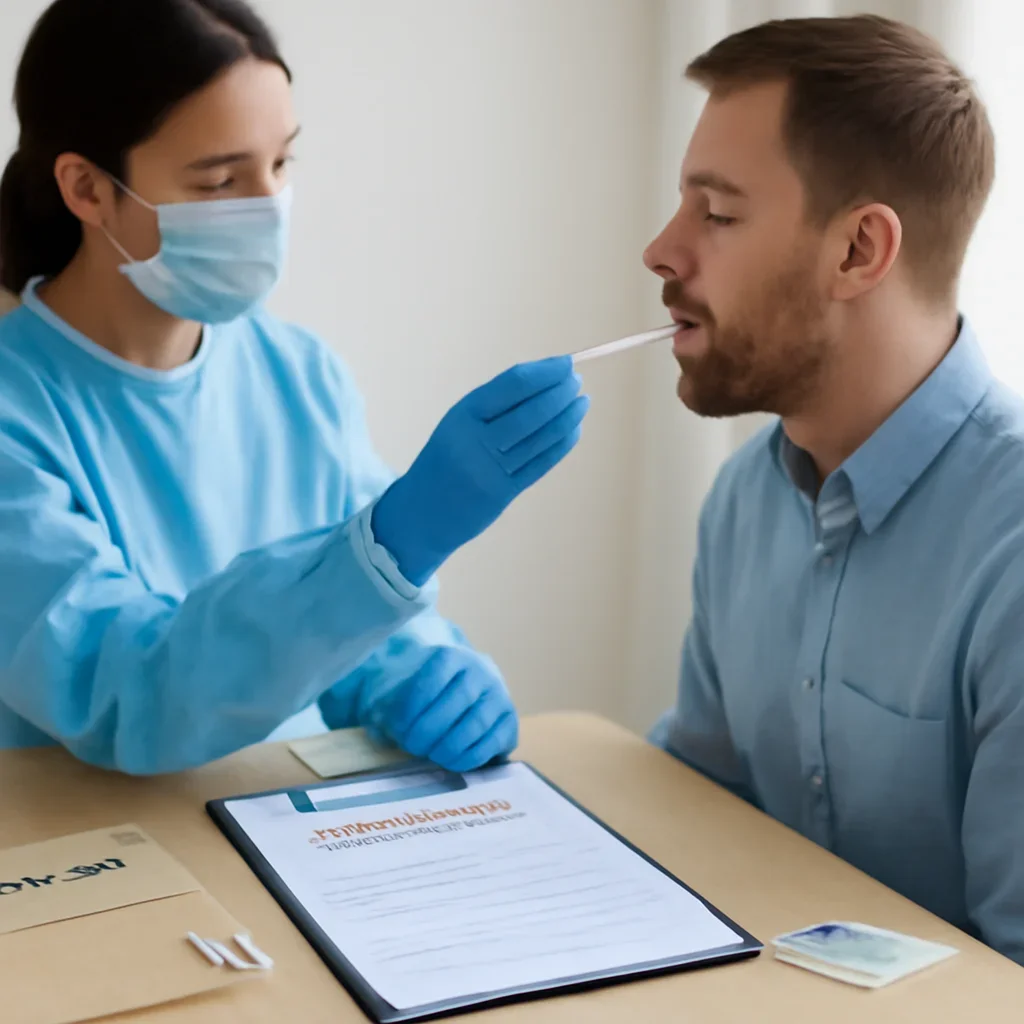
It is designed to help verify who provided each sample, who collected it, how it was labeled, and how it moved to the laboratory without an undocumented break in handling.
A standard at-home DNA kit is normally collected privately by the customer. That can be suitable for personal information, but it does not usually include the identity checks, neutral collection, witnessed documentation, or controlled transfer required for formal use.
The organization receiving the results decides what it will accept. The following situations commonly require customers to confirm formal collection and documentation rules before testing.
Family law, identity, custody, support, inheritance, or other legal matters may require verified participants and documented sample handling.
An agency may specify the acceptable laboratory, collection location, identification documents, participants, and method for receiving results.
A formal process may be requested when results could affect an official record, administrative decision, or documented biological relationship.
A process accepted in one matter may not meet the requirements of another. State rules, local procedures, participant locations, collector availability, and the requesting authority can all affect the correct workflow.
Both workflows may involve DNA analysis, but their collection, documentation, and intended use are different.
| Requirement | At-home informational test | Legal chain-of-custody test |
|---|---|---|
| Primary purpose | Personal knowledge, education, wellness information, or private decision-making. | Potential submission to a court, agency, attorney, government department, or other formal recipient. |
| Sample collection | Usually collected by the customer at home by following the kit instructions. | Usually collected under supervision by an approved or qualified third party. |
| Identity verification | Formal identity verification is generally not part of the home collection process. | Identification and participant documentation may be required before collection. |
| Sample handling | The customer usually packages and returns the sample. | The collection and transfer process is documented to preserve handling records. |
| Result acceptance | Not designed to establish legal admissibility or agency acceptance. | May be considered when the complete process meets the receiving authority’s requirements. |
| Best first step | Select a test that matches the personal information you want to learn. | Confirm the exact requirements with the receiving authority before ordering or collecting samples. |
uDNA cannot guarantee that a result will be accepted by a court, government agency, attorney, or other organization. Acceptance depends on the requesting authority and whether its specific requirements were followed. Review the uDNA legal disclaimer and obtain appropriate legal guidance when needed.
The exact steps can vary, but most formal workflows follow a structured sequence designed to reduce identity and sample-handling questions.
Ask the requesting authority which test, laboratory standard, participants, documents, and delivery method it requires.
Share the purpose, locations of the participants, deadline, and instructions supplied by the receiving organization.
Participants may need identification, photographs, signatures, and other documentation at the collection appointment.
The collection and laboratory workflow records labeling, packaging, custody, and transfer of the samples.
Results are provided according to the agreed process and may need to go directly to the designated recipient.
Collecting this information first can help prevent avoidable delays, repeat appointments, incorrect test selection, or results that do not match the receiving organization’s instructions.
Local availability and collection procedures can depend on the participants’ locations and the requirements of the organization receiving the results.
These answers provide general guidance. Always follow the instructions of the organization that will receive or review the results.
No. Many DNA tests are designed for personal information and use at-home sample collection. A legal-use test generally requires verified identity, supervised collection, documented sample handling, and compliance with the receiving authority’s requirements.
A standard home kit should not be assumed to meet court requirements. Contact the court, attorney, agency, or organization involved and confirm the acceptable collection and laboratory process before ordering.
Some immigration, relationship, government, or legal matters may require an AABB-accredited laboratory, while other situations may follow different standards. The requesting authority should confirm the required accreditation.
Separate supervised appointments may be possible, but collection locations, documentation, timing, and sample coordination should be confirmed before the process begins.
Timing depends on appointment availability, participant locations, sample transport, test type, laboratory processing, and reporting requirements. Review the general guidance on how long DNA test results may take.
Delivery depends on the agreed workflow. Results may be provided through a private system or sent directly to an authorized recipient. Learn more about private and secure DNA results.
No laboratory or testing provider should replace confirmation from the receiving authority. Acceptance depends on whether the required test, collection, documentation, laboratory, and delivery procedures were followed.
Tell uDNA who is requesting the test, where the participants are located, what deadline applies, and whether you received written collection or laboratory instructions. The team can help you identify the questions that should be resolved before an order is placed.